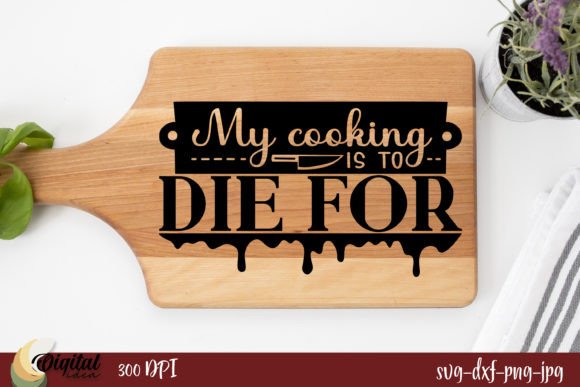
Reviewing My Cooking is to Die for: A Designer’s Take
As an embroidery designer who has spent countless hours digitizing, testing, and critiquing machine embroidery design files, I approach every new asset with a critical eye. It is not just about whether the artwork looks cute on a screen; it is about how that artwork translates into thread, how it behaves under the needle, and ultimately, how it performs as a finished product in the hands of a customer. Recently, I evaluated My Cooking is to Die for, a kitchen-themed graphic that promises a blend of humor and culinary pride. Here is my practical assessment of how this design holds up in real-world embroidery project scenarios.
First Impressions and Visual Personality
The first thing that strikes you about My Cooking is to Die for is its bold, confident typography paired with thematic imagery. The mood is playful yet sharp, capturing the essence of a home cook who takes their craft seriously but doesn’t take themselves too seriously. From a layout perspective, the balance between text and graphical elements appears well-considered for standard hoop sizes. The visual personality suggests versatility; it is not overly frilly or strictly traditional, which makes it appealing to a modern demographic of Etsy seller audiences and boutique shoppers alike.
When viewing the source files—provided as a comprehensive zip folder containing SVG, DXF, EPS, PDF, JPEG, and PNG formats—the clarity of the lines is evident. For those of us working in Crafts and Graphics, having access to vector-based formats like SVG and EPS is crucial for scaling without losing resolution, especially if you plan to create printable mockup assets or resize the design for different applications before digitizing or stitching.
Real-World Application: The Apron Test
To truly understand the value of an embroidery file, you must imagine it on a tangible item. I visualized My Cooking is to Die for stitched onto a high-quality cotton canvas apron. This is a classic personalized gift scenario, often requested for housewarmings, bridal showers, or holiday presents. On an apron, the design sits prominently on the bib or chest area, making it a statement piece.
In this context, the design’s legibility is paramount. Kitchen environments are busy, and an apron is both a protective garment and a badge of honor. The bold nature of this quote ensures it remains readable from a distance. If I were producing this for a small shop product line, I would pair it with contrasting thread colors—perhaps a deep charcoal or navy on a natural linen background—to emphasize the wit of the phrase. The result is a handmade product that feels professional and thoughtful, rather than mass-produced.
Versatility Across Product Lines
Beyond aprons, this design shows strong potential for various custom apparel items. Consider a cozy fleece sweatshirt. Sweatshirt embroidery requires careful attention to stitch density to prevent puckering, but the open spacing typically found in quote-style designs like this one helps mitigate that risk. It could also work beautifully on a sturdy tote bag, serving as a fun tote bag design for grocery runs or farmers' market trips. The humor resonates with anyone who spends time in the kitchen, making it a reliable seller for craft business owners looking for evergreen content.
For those interested in smaller goods, this could be scaled down for an embroidered patch or a tea towel. However, scaling requires vigilance. When reducing the size for smaller hoops, you must ensure that the finer details of the font do not become so small that they lose definition or cause thread breaks during stitching.
Technical Considerations for Stitching
While the aesthetic appeal is strong, the technical execution determines the quality of the finished product. Since the product description indicates this is a graphics package (SVG, DXF, etc.) rather than a pre-digitized embroidery file format like PES or DST, users will need to digitize the design themselves or use software that converts these vectors into stitch data. This offers creative control but demands expertise.
When converting or setting up this design, pay close attention to stitch density. Heavy fill areas can distort lightweight fabrics. If you are stitching on a thin cotton tea towel, a lighter fill stitch or even a running stitch outline might be more appropriate than a dense satin fill. Conversely, on a thick towel or denim, a robust satin stitch border can provide a premium, raised texture that customers associate with high-quality commercial embroidery.
Stabilizer choice is equally critical. For stretchy fabrics like t-shirts or knit caps, a cut-away stabilizer is non-negotiable to maintain the shape of the lettering over time and through multiple washes. For woven fabrics like aprons or pillow covers, a tear-away stabilizer may suffice, provided the design is not overly dense. Always test on scrap fabric first. This simple step saves material costs and protects your reputation by ensuring the final item meets professional standards.
Navigating Fabric and Hoop Constraints
Not every surface is ideal for every design. My Cooking is to Die for features text, which means readability is key. Avoid placing this design on highly textured fabrics where the threads might obscure the finer parts of the letters. Similarly, be cautious with dark fabrics if you are using light thread; while contrast is good, ensure the stitch coverage is sufficient so the fabric color does not show through the gaps in the stitching.
Curved surfaces, such as caps or hats, present another challenge. The design must be centered perfectly, and the curvature can distort the perception of straight lines. If using this for headwear, consider simplifying any intricate decorative accents to ensure clean stitching on the curved plane. Always confirm your hoop size capabilities before committing to a project. If the design is large, you may need a jumbo hoop or a re-hooping strategy, which increases production time and complexity.
Commercial Viability and Brand Consistency
For digital product sellers and creative entrepreneurs, the versatility of this asset is a major selling point. Because it comes in multiple graphic formats, it can be used beyond embroidery. You might use the PNG or JPEG for sublimation printing, or the SVG for vinyl cutting, creating a cohesive product line across different crafting methods. This multi-use potential increases the perceived value of the purchase.
However, before selling any finished product or using this in commercial embroidery projects, you must verify the licensing terms. While the file formats suggest broad usability, intellectual property rights vary by creator. Ensure you have the right to use the design for commercial goods, especially if you are building a brand around kitchenware or humorous apparel. Consistency in your product offerings builds trust. If My Cooking is to Die for aligns with your brand’s voice—witty, domestic, and bold—it can become a staple in your catalog.
Final Verdict for Makers and Designers
In summary, My Cooking is to Die for is a strong contender for makers looking to add personality to their kitchen-themed collections. Its strength lies in its clear message and adaptable layout. Whether you are creating a holiday embroidery gift for a foodie friend or stocking your small shop product shelves with witty aprons, this design offers a solid foundation. Just remember: the difference between a good design and a great product lies in the execution. Test your tensions, choose your stabilizers wisely, and respect the limitations of your materials. With careful attention to detail, this graphic can translate into a standout embroidery project that delights customers and enhances your portfolio.